
Rental LED Display Buying Guide 2026: The 9 Things Event Companies Actually Care About
I was on a call last month with an AV rental house in Germany. They’d just taken delivery of 200 panels from a new supplier — cheaper than their usual source, and the spec sheet looked fine on paper.
Three weeks later, they’d already had six modules fail mid-event, two power supplies blow during load-in, and a curved lock snap while the screen was hanging. They didn’t lose the client, but it was close. And the money they’d “saved” on the panels? Gone — in emergency freight, tech hours, and one very tense conversation with the client.
If you’re specing out rental LEDs for the 2026 season, this guide is for you. Not the “here’s what pixel pitch means” version—you already know that. This is the version about what actually breaks, what actually matters when you’re three hours from doors, and how to tell the difference between a factory that knows rental and a factory that just printed a new brochure.
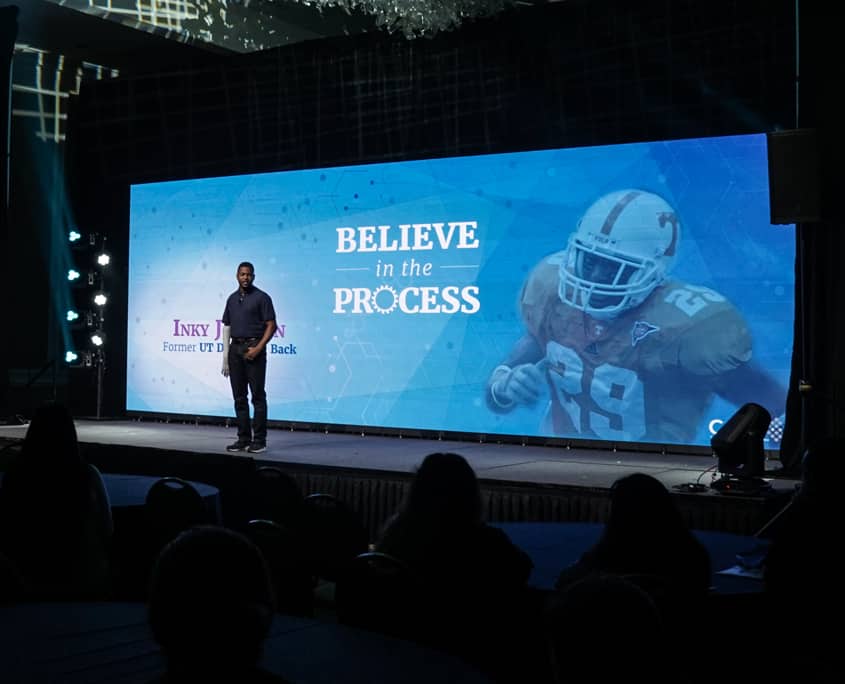
The rental market in 2026 (what changed)
Three things happened in the last 18 months that affect what you should be buying:
1. P2.6 became the new standard for corporate. Two years ago, P3.91 was the safe choice for indoor corporate. Now clients have seen P2.6, and they’re asking for it by name. If your fleet is still P3.91-heavy, you’re not broken — but you’re losing pitches.
2. Magnesium cabinets went from “interesting” to “why is this so light?” Die-cast aluminum is still the default, and it’s fine. But magnesium is 30–40% lighter, and once your crew handles a magnesium panel, they don’t want to go back. The price gap is narrowing fast.
3. Everyone claims “curved” now. Being able to make a 10° convex curve isn’t the same as a panel that was designed for it. If you’re buying curved capability, ask to see a video of the panels actually curved—not a render, a real video. More than one factory has discovered that their “curved” lock design doesn’t actually seat properly once you’ve got a 20-panel arc under tension.
Factor 1: Pixel pitch — the real decision, not the brochure answer
The standard advice is “match pixel pitch to viewing distance.” That’s true, but it’s also incomplete. Here’s what actually drives the decision on rental screens:
| If your typical event is… | The pitch that makes sense | Why |
|---|---|---|
| Corporate A/V, close seating | P1.95 or P2.6 | Text readability at 3–5m |
| General events, mixed indoor/outdoor | P2.97 or P3.91 | The compromise that works for most things |
| Outdoor festivals, large stages | P3.91 or P4.81 | Brightness matters more than detail at 10m+ |
But here’s what the charts don’t tell you: the difference between P2.6 and P2.97 is visible, but the difference between P2.97 and P3.91 is what your client will complain about.
P2.97 is the current sweet spot for rental houses that want one fleet that does both indoor corporate and outdoor stages. It’s not the sharpest. It’s not the cheapest. It’s the one panel that doesn’t get left in the warehouse because “it’s not right for this event.”
Also worth knowing: if you’re mixing P2.6 and P3.91 in the same fleet, make sure the cabinet sizes match. Nothing wastes more time than discovering your P2.6 panels are 500×500mm and your P3.91 panels are 500×1000mm and now you’re trying to build a seamless wall with two different grid systems.
Factor 2: Cabinet size—500×500 mm vs. 500×1000 mm
This sounds like a small detail. It’s not.
500×500mm panels:
- More flexible for creative builds and odd dimensions
- Lighter per panel (easier for one person to handle)
- More seams, which means more potential failure points
- Slower to rig (more panels per square meter)
500×1000mm panels:
- Faster to rig on big straight walls
- Fewer seams = better image continuity
- Heavier (needs two people or a motor)
- Less flexible for small or irregular builds
What most rental houses actually do: 500×500 mm for everything under 20㎡ where flexibility matters. 500×1000mm bottom rows on big walls to speed up ground stacking. Or they buy a 500×500 mm and just accept the extra time, because the flexibility is worth it.
There’s no wrong answer. The mistake is not deciding—and then discovering your crew hates the choice six events in.
Factor 3: Weight and what your crew will tell you after three load-ins
A die-cast aluminum 500×500mm panel typically weighs 7–9 kg. A magnesium panel of the same size: 5–6 kg.
That doesn’t sound like much until your crew is on panel number 40 at 7 am with a 10 am door. Then it matters.
The calculation that matters:
If your typical wall is 20 m² and your crew is two people, every kilogram per panel costs you time and backs. Magnesium costs more upfront — typically a 15–25% premium over die-cast aluminum — but if you’re running a rental house where panel handling is a daily thing, the payback is in crew efficiency and turnover, not in fuel savings.
One more thing: check the handle design. A panel that’s 0.5kg lighter doesn’t help if the handle placement means your crew has to grip it awkwardly every time. I’ve seen panels with great specs that nobody wanted to pick up because the handle was in the wrong place.
Factor 4: Curved locks — the feature that looks good in the catalog
Almost every rental panel now claims “curved capable.” Very few actually are.
Here’s what to look for:
- What’s the curve range? ±15° is standard. Some go to ±20°. Past that, you’re doing creative installs, not standard curved walls.
- Does the curve lock independently of the rigging lock? If you have to unlock the panel from the truss to adjust the curve, it’s not really “curve capable.” You need independent curve adjustment.
- Can I see a video of a curved build? If the factory can’t show you a real video of their panels curved, there’s a reason.
Also, if you’re buying curved capability, buy a few extra panels with it in mind. A curved wall needs more panels than a flat wall of the same width, because each panel shows a sliced portion of the image. Your usual panel count calculation doesn’t apply.
Factor 5: Brightness and refresh rate — the two specs that settle arguments
Brightness:
- Indoor rental: 800–1500 nits is plenty. Anything more just adds heat and power draw.
- Outdoor rental: 4500–5000 nits minimum. If a factory quotes you outdoor panels at 3000 nits, they’re either mistaken or selling you an indoor panel with an outdoor label.
Refresh rate:
This is the spec that settles arguments with clients who don’t know LED terminology.
They don’t say “the refresh rate is too low.” They say, “The screen is flickering on camera.”
For any event that’s being filmed or photographed — which is most corporate events now — you want ≥3840Hz. Some factories will tell you 1920Hz is fine. It’s fine until the client’s marketing team sends you a photo of the screen with a black bar flickering across it.
Also worth checking: does the refresh rate hold across the brightness range? Some panels are 3840Hz at 100% brightness and drop to 1920Hz when you dim them. Ask the factory to confirm.
Factor 6: Power consumption — why your venue electrician is your friend
I’ve seen more events delayed by power problems than by anything else. Not because the screens drew too much power, but because nobody checked before they got to the venue.
What to ask:
- What’s the average power consumption per panel, not the peak? Peak is what the panel draws for 0.5 seconds at startup. Average is what runs all day.
- Does the panel have power loop-through? (One power cable feeding the next panel instead of running individual cables to each.) It’s not a luxury — it’s the difference between a clean power setup and a bird’s nest of cables behind the screen.
- Can the panel handle voltage fluctuation? Generator power at outdoor events is dirty. If your panels don’t have stabilization, you’ll find out during the first thunderstorm.
A typical 500×500 mm rental panel draws 20–40W average. A 20㎡ wall is 80–160W per panel × panel count. It adds up, and venue electricians will notice.
Factor 7: Setup speed — where you actually save or lose money
The dirty secret of rental LED is that the panel price is maybe 60% of your actual cost. The other 40% is crew time, transport, and the cost of a panel that fails at the wrong moment.
What actually speeds up setup:
- Tool-free locks. If your crew needs a hex key to assemble the wall, you’re losing 10–15 minutes per wall. It sounds small. It isn’t.
- Clear labeling. Which side is up? Where’s the data in? If the panels aren’t obviously labeled, your crew will figure it out the slow way.
- Magnetic module attachment. When a module fails and you need to swap it, tool-free magnetic access saves you 5–10 minutes per fix. Over a season, that’s real money.
- Pre-configured RCG files. If every event starts with “why isn’t the mapping right,” your panels aren’t properly pre-configured. A good factory sends you the RCG file with the shipment and tests it before it leaves.
Factor 8: Spare parts strategy — the thing nobody thinks about until they need it
The standard advice is “order 3–5% spare modules.” That’s fine as far as it goes, but it’s incomplete.
What you actually need:
| Item | Ratio | Why |
|---|---|---|
| LED modules | 3–5% | The thing that fails most often |
| Power supplies | 1 per 50 panels | When they go, the whole panel goes dark |
| Receiving cards | 1 per 100 panels | Rare, but when they fail, it’s annoying |
| Data/power cables | 5–10% | They get lost more often than they break |
| Hanging locks/rigging | 1 per 20 panels | They get dropped; they get lost |
Also, make sure your spare modules are the same batch as your order. LED bins shift between production runs, and a “compatible” module from a different batch can have a visible color difference. A good factory keeps batch records and can match spares months later. Ask before you buy.
Factor 9: The factory question — how to tell who knows rental
This is the one that’s hardest to fake. Any factory can print a catalog that says “rental series.” But rental panels live a different life from fixed installation panels. They get moved, dropped, rained on, loaded into a truck, unloaded, and built again — sometimes 50 times a year.
Questions that separate the factories that know rental from the ones that don’t:
- “Can you show me a customer who’s had these panels in rental service for 12+ months?” If they can’t or won’t, that’s your answer.
- “What’s your spare parts ratio on a 100-panel order?” The answer should be immediate. If they have to think about it, they don’t do this often enough.
- “Can I see the RCG file before shipment?” A factory that knows rental preconfigures this. A factory that doesn’t will send you panels and say, “You can create the file yourself.”
- “What’s the replacement cycle you design for?” Rental panels should be designed for 3–5 years of heavy use. If they’re designing for “it’ll last through the warranty period,” that’s a different product.
RFQ checklist — send this to any supplier
If you want to compare suppliers properly, send them all the same RFQ. Half the confusion in LED procurement comes from comparing quotes that aren’t quoting the same thing.
Your RFQ should include:
- Total panel quantity and pixel pitch
- Indoor, outdoor, or both
- Typical wall size (xx in meters)
- Hanging, ground-stack, or both
- Control system preference (if you have one — NovaStar, Colorlight, etc.)
- Target market (for certification requirements)
- Required delivery date
- Spare parts ratio you expect
Then, when you get the quotes back, compare them on total delivered cost (panels + shipping + duties + spares), not just panel price.
What we build at Eyecatchmedia
Our rental lineup covers the pitches that rental houses actually need:
| Model | Pitch | Cabinet | Weight | Brightness | Best for |
|---|---|---|---|---|---|
| P1.95 Rental | 1.95mm | 500×500mm | ~7 kg | 1000 nits | Corporate, close viewing |
| P2.6 Rental | 2.6mm | 500×500mm | 7–8 kg | 1200 nits | Corporate, premium events |
| P2.97 Rental | 2.97mm | 500×500mm | 7–9 kg | 1200–4500 nits | Indoor/outdoor crossover |
| P3.91 Rental | 3.91mm | 500×500mm / 500×1000mm | 8–9 kg | 4500–5000 nits | Outdoor stages, festivals |
| P4.81 Rental | 4.81mm | 500×500mm | 9–10 kg | 5000 nits | Large outdoor, budget fleets |
All panels ship with:
- Die-cast aluminum cabinet (magnesium upgrade available)
- Tool-free quick locks + curved locks (±15°)
- Power loop-through
- Pre-configured RCG file
- 3-year warranty + matched spare modules from the same production batch
FAQ — the questions I get most often
Q: Should I standardize on one pitch or keep multiple in the fleet?
A: If you can afford it, standardize. Mixed fleets create training overhead, spare parts complexity, and the risk of showing up to an event with the wrong panels. If you can’t afford to replace everything at once, prioritize your most common event type and standardize that first.
Q: How many panels do I need for a standard corporate backwall?
A: A typical corporate backwall is 4–6m wide × 2–3m high. At P2.6, that’s roughly 32–72 panels depending on exact dimensions. But the real answer is, what does the client’s content look like? If they’re showing detailed charts, go bigger. If it’s mostly logos and full-screen video, you can go smaller.
Q: What’s the real difference between NovaStar and Colorlight control systems?
A: NovaStar is more common in high-end rentals and has better tech support globally. Colorlight is cheaper and perfectly capable for most applications. If your crew already knows one, stick with it. Retraining on a control system is expensive in crew time.
Q: How long do rental panels actually last?
A: 3–5 years of heavy rental use is realistic. After that, you’ll probably want to refresh because the market has moved on, not because the panels stopped working. If you’re still using P4.81 panels for corporate work in 2026, you’re not competitive on image quality — even if the panels still work.
Q: Can I see a sample before ordering a full fleet?
A: Yes, and you should. A sample lets you check weight, handle placement, lock feel, and image quality in real conditions. It’s the cheapest insurance you’ll buy on a fleet order.
One last thing
The rental LED market is full of suppliers who will tell you theirs is the lightest, the brightest, and the cheapest. Usually, two of those are true, and the third one depends on how you read the spec sheet.
If you’re planning a fleet purchase this season and want to talk through what actually makes sense for your event mix — not what makes sense for a factory’s quota — get in touch. We’ve been building rental panels for 10+ years, and we’ve seen enough failed events to know what breaks and why.
Spec’ing out your 2026 rental fleet? Contact us for a quote and a sample panel you can test under real conditions.