
How to Become an LED Display Distributor in Your Region: Requirements, Margins & Support
If you’re asking how to become an LED screen distributor, the honest answer is: you don’t need a warehouse on day one. You need two or three customers who will actually buy, roughly $3,000–8,000 for demo units, and the willingness to service what you sell. Everything else — territory, exclusivity, price tiers — gets negotiated after you’ve proved something.
Two years ago your customers started asking for LED walls. The church that wanted a 4×3 meter wall behind the stage. The car dealership that saw one at a competitor’s grand opening. The municipal events team with a budget line and no vendor. You quoted a few through a middleman — an importer, a regional rep, someone with a WhatsApp account and a warehouse two states away — and two things happened. Your price came back uncompetitive. And when a module died in month four, his answer took nine days and arrived without instructions.
Somewhere between the factory and your customer sits 30–40% of the price. The middleman earns part of it. What you’re really asking is: what does the middleman actually do, and could you do it yourself?
This article answers that honestly, including the parts that should talk you out of it. It’s written from both sides of the desk — the aspiring distributor’s and the factory partnership manager’s, where applications arrive two lines long (“I want to be your distributor in Europe. Send best price.”) and say everything and nothing: no customers, no market, no plan. Just appetite.
The Five Questions to Ask Yourself First
Most people who fail at this skip the self-assessment and go straight to price lists. Answer these five before you ask any factory for theirs.
| # | Question | What “yes” looks like | What “no” means |
| 1 | Do you sell, or do you wait for the phone? | A pipeline you can name, prospecting every week | LED stock does not sell itself. It sits |
| 2 | Can you service what you sell? | You can swap a module, diagnose a receiving card, hold spares | Every warranty call becomes a factory email and a week of silence |
| 3 | Do you have 2–3 anchor customers or a repeatable channel? | Named accounts, an events calendar, a rental fleet that needs panels | You’re buying a demo unit and hoping |
| 4 | Can you fund a demo unit and a pilot order? | $3,000–8,000 available without touching payroll | Start as a project-pull agent, not a dealer |
| 5 | Will you still be in this business in three years? | You can describe your company in 2029 with specifics | Factories invest in partners who invest back |
Question 2 is where AV integrators trip. You can pull cable and hang a projector, so you assume an LED cabinet is the same animal. It isn’t — a dead section could be a receiving card, a power supply, a flat ribbon or all three, and the customer doesn’t care which. The 3-year warranty covers parts. Someone local still has to open the cabinet, and that someone is you.
What the Business Actually Looks Like
Nobody writes this part down, so here it is.
A realistic month for a small dealer: four or five site surveys (measuring walls, checking power, arguing with electricians about rigging points), eight to twelve quotes built from factory price lists, one or two closed deals if you’re good, one freight exercise involving customs paperwork and a truck that shows up without a liftgate, and two to five service calls. One service call happens at 7 AM on a Saturday, because that’s when the rental shop can take the screen out of service.
You will hold a spares shelf — modules, receiving cards, power supplies, cables. Our orders ship 5% spares as standard, and it still won’t feel like enough the first time a section goes dark an hour before a grand opening.
The LED screen distribution business is a service company that happens to sell hardware. The distributors who treat it as passive income are the ones who disappear from our partner list in year two.
The Money, Honestly
Dealer gross margin on standard lines — common pitches, rental and fixed install — typically runs 20–35% when you buy direct from a factory (market-typical range; project-pull agents land at the bottom because they carry no inventory risk). For calibration: commodity electronics distribution runs 10–15%. LED pays more because it demands more — which is the next section.
Where the margin goes: demo stock depreciates (a P2.9 indoor demo that looked current this year is a discount item in two), service labor is real (your technician’s Saturday is either your cost or your payroll line), and marketing matters because a demo unit nobody sees is furniture.
The mix that works — three places the money actually lives, observed from reorder data:
- Hardware margin on projects. Rental LED tends to carry healthier gross margins than fixed install, where every bid turns into a price war. Thin if you sell a cabinet as cargo; fat if you sell an outcome.
- The business after the sale. Rental partners earn per event, not per cabinet. Service revenue follows: module swaps, maintenance contracts, spare sales. Install labor adds 10–15 points to a project; a service agreement turns the warranty period from a cost center into a retainer.
- Reorder economics. Distribution pricing comes with volume evidence, not a signature request — once your buying price moves, the same selling price turns into margin. That is the quiet mechanic behind partners who grow: the later orders earn more than the early ones.
For the full stack — OEM branding, private-label tiers, what happens to your margin when your logo goes on the cabinet — read our OEM partnership breakdown. Read it before you set your price list, not after.
The tradeoff nobody mentions: LED revenue is lumpy. Projects cluster, rentals are seasonal, and the margin has to fund the gaps. Plan your capital around the quiet months, not the deposit.
Entry Paths, Ranked by Risk
| Path | Capital | Risk | Typical gross margin | Fits you if |
| Project-pull agent | Under $1,000 | Lowest | Lowest; quote-to-order | You have named projects but no demo budget yet |
| Demo-stock dealer | $3,000–8,000, 2–3 demo units | Low–medium | 20–30% | You close better when the customer can touch the screen |
| Stocking distributor | $15,000–40,000 pilot pallet | Medium | 25–35% plus volume rebates | You run a repeatable channel: rental fleet, rollouts, resellers |
| Exclusive territory partner | Earned by volume, not bought | Committed | Best terms, protected territory | You’ve proved demand and want the region locked |
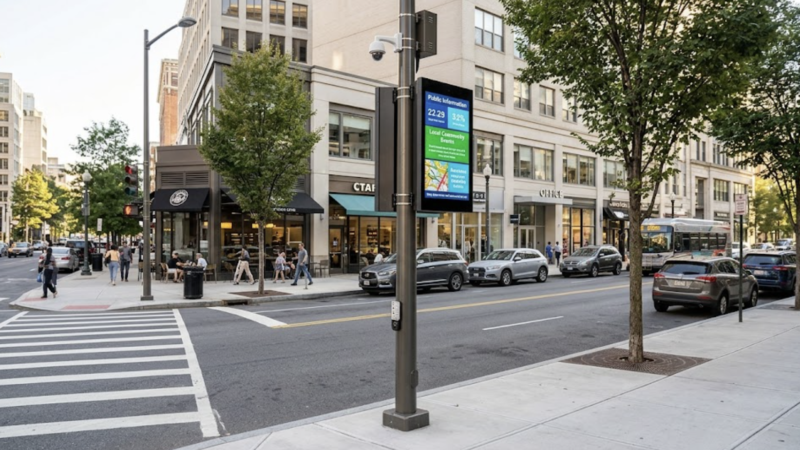
Two references worth studying. Our UK rental partner started with demo stock and now runs 630 cabinets of P3.91 rental screen — the demo-stock dealer path taken to its logical end. Our 70-pole screen program for the US market shows what a structured rollout between one factory and one committed partner looks like when both sides plan it.
Exclusivity sits at the bottom of the table for a reason. It’s the prize at the end of the ladder, not the first rung.
What a Real Application Contains
Now the view from the other side of the inbox. Applications taken seriously contain four things, and none of them is a company profile:
1. Who your customers are today. Named segments or, better, named accounts. “Event production companies in Rotterdam; we cover three festivals a summer” tells us what we need. “All businesses in Europe” predicts exactly one thing: no sales.
2. What you currently sell, and to whom. Adjacency is the strongest signal in the whole application. If you sell staging, sound, or rigging, screens slot into a book your phone already fills. One of our best partners came out of telecoms installation crews — the crew already climbed structures and the trucks already existed; the screens rode on top of an existing business.
3. Your service capability. Who holds the screwdriver? Named person, named tools, named history. “We’ll figure out service later” has ended more partnerships than price ever has.
4. A market plan with numbers you can defend. Say 200 LED projects a year and show where you counted, and we believe you. Say 20,000 because a market report said so, and we’re going to have a short call.
What we don’t check at application stage: office size, company age, letterhead. Some of our best partners started as one-man integrators with a van and a good local name. We’ve also had gorgeous applications from companies with showrooms that never sold a cabinet.
The van won.
The Five Ways New Distributors Fail
A mental list, updated by regret. If you recognize yourself in one of these, the fix is cheap now and expensive later.
1. Bought a container before selling a demo. The warehouse becomes the business. Stocking does get better pricing — that’s the real tradeoff — but sell first, stock second. Most new distributors fail from buying too much, not too little. Slower ramp, breathing room.
2. No service capability. The partnership dies in front of a client at month ten. A dead module at load-in, and the distributor who can’t swap it calls us; we answer fast, but the client experienced the downtime, not the factory.
3. Quoted everything, closed nothing. Thirty quotes, zero orders. Without an anchor customer you have no market knowledge — no real price point, no real objection list. Activity isn’t progress.
4. Expected the factory to generate leads. We route the inquiries that land with us. We don’t staff your sales team. Distributors waiting for the phone to ring from Shenzhen are waiting for a bus that doesn’t run their route.
5. Demanded exclusivity before earning it. Exclusivity granted generously is revoked quietly, and both sides know it. We would rather start non-exclusive and watch who actually moves cabinets.
What a Factory Should Provide You — and What It Can’t
| Factory provides | Factory cannot provide |
| Product, QC, and a live video audit before you commit a dollar | Your customers |
| Downloadable certifications before you commit, not after | Your local service — we ship 5% spares; someone still opens the cabinet |
| Product training on video call — recorded, so your techs can rewatch at 2 a.m. before load-in | Your market knowledge: which venues, which seasons, who undercuts whom |
| Remote engineering support on your client’s screen | Your reputation — the customer signs with you, not our logo |
| Marketing assets in 12 languages; inquiry routing from your territory once signed | Your follow-up — the third coffee with a hesitant client |
Once you’re past the sample, support looks like this: cert packs downloadable before you order so much as a sample, the 5% spares program sized to your shipment (a dead module becomes a ten-minute swap instead of a transpacific emergency), engineers on a call walking your tech through the fix, and the OEM partnership guide if white-label is where your business is heading.
The honest limit, since you’d find out anyway: we do not run your sales team, and we do not fund your marketing. We hand you the lead; the selling is yours. The partnership fails when either side assumes the other is doing their job — we’ve watched distributors expect the factory to generate leads, and factories expect the distributor to be a warehouse with a pulse. Both assumptions end the relationship within a year.
How the Ramp Actually Goes
No secret handshake. The sequence:
- Video call, 45 minutes. We ask about the four things above. You audit us back — we’ll walk the production line on camera, and if you want to come in person, come. Our factory audit guide tells you what to look for in any factory, including ours.
- Sample or demo unit, paid by card or PayPal. No free samples — it filters for seriousness and keeps pricing fair for every partner in your market.
- Pilot order, 30/70 T/T. A small mixed batch: screens plus spares. You prove the sell; we prove the supply.
- Distribution terms, discussed with volume evidence. After the pilot and the next order, when there’s a number to talk about. Terms are built on what you sold, not what you plan to sell.
- Territory review, annually. Based on actual movement.
Time expectation: most serious partners reach the terms discussion within two to three orders, not two to three weeks. Anyone who offers you national exclusivity in a month is either desperate or planning to take it back — ask which.
And the pattern from our books, without exception: partners who bring one real asset — customers, permits, a service crew, a channel — beat partners who bring only ambition. Ambition we can supply from our side, cheaper. The UK partner’s application named the festivals they already served; the US pole-screen partner arrived with city permits — slow, local, unglamorous work no factory can do from abroad. They brought market access; we brought hardware.
FAQ
Do I need exclusive rights to become a distributor? No — and exclusivity you earn is worth more than exclusivity you’re granted. It protects whoever invests seriously in a territory, so it’s earned with volume evidence, not granted at first contact. Start non-exclusive, prove demand with a pilot, then negotiate territory terms neither side can fake. The money in distribution comes from anchor customers, service, and reorder pricing — none of which cares where your paper boundary ends.
How much capital do I need to start? Less than most plans assume, more than zero. Project-pull agent: under $1,000. Demo-stock dealer: $3,000–8,000 for two or three units. Stocking distributor: $15,000–40,000 for a pilot pallet. Samples ship by card; production orders run 30/70 T/T, so your capital ramps with your orders. What kills applications is not small budgets — it’s plans whose size doesn’t match the budget.
Can I become an LED dealer without technical experience? You can start, at agent level, because factory engineers support your first installs by video. You can’t stay there — someone in your company has to swap a module eventually, or you need a service partner under contract. What you cannot outsource is owning the client’s problem when a screen goes down.
What does the factory do during my first project? Pre-sale quoting and layout drawings, a video audit of your order before it ships, 5% spares packed with the goods, and an engineer on a call for commissioning. What we don’t do is stand on the site. Your hands, our parts, and a shared interest in the thing working.
How do I verify a factory is real before committing? Three checks, in order: download the certifications yourself — CE, FCC, RoHS — before any payment; request a live video audit of the production floor while asking questions in real time; take a reference call with an existing partner in a market that doesn’t compete with yours. We offer all three as standard, and any factory that hesitates on them is telling you something.
Send the Four Things
Becoming an LED display distributor in your region, as we see it from this desk: five honest self-answers, four real application items, one paid sample, a pilot that sells, terms built on evidence.
Skip the letterhead. Send who your customers are today, what you sell and to whom, who holds the screwdriver, and a market plan with numbers you can defend. Two lines is fine if they’re the right two lines.
We answer every serious application within two working days, including the honest no. → Send your application